1 kW Rooftop Solar System in Odisha for ₹1,875: Who Can Apply and How (2026)
Read in another language:
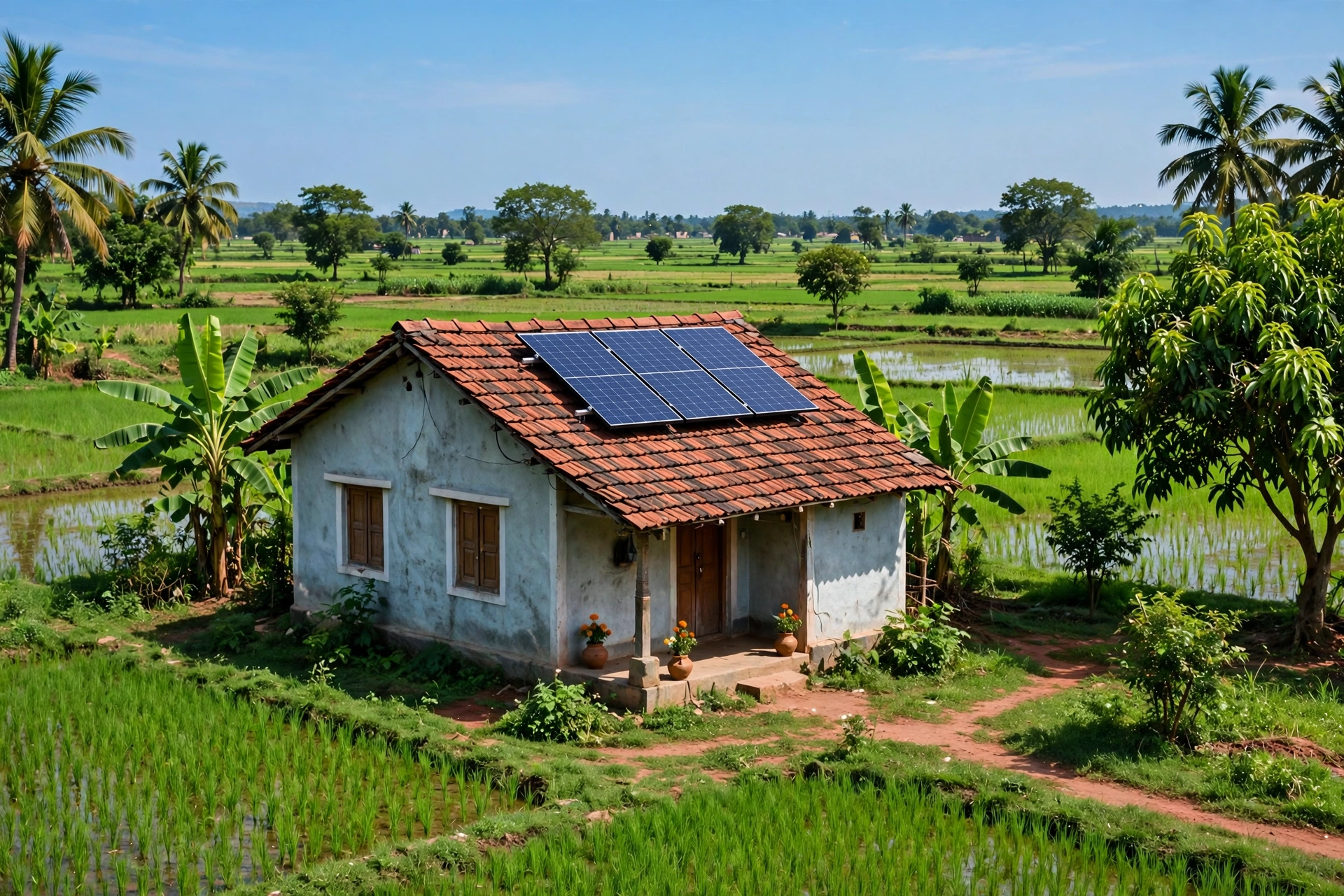
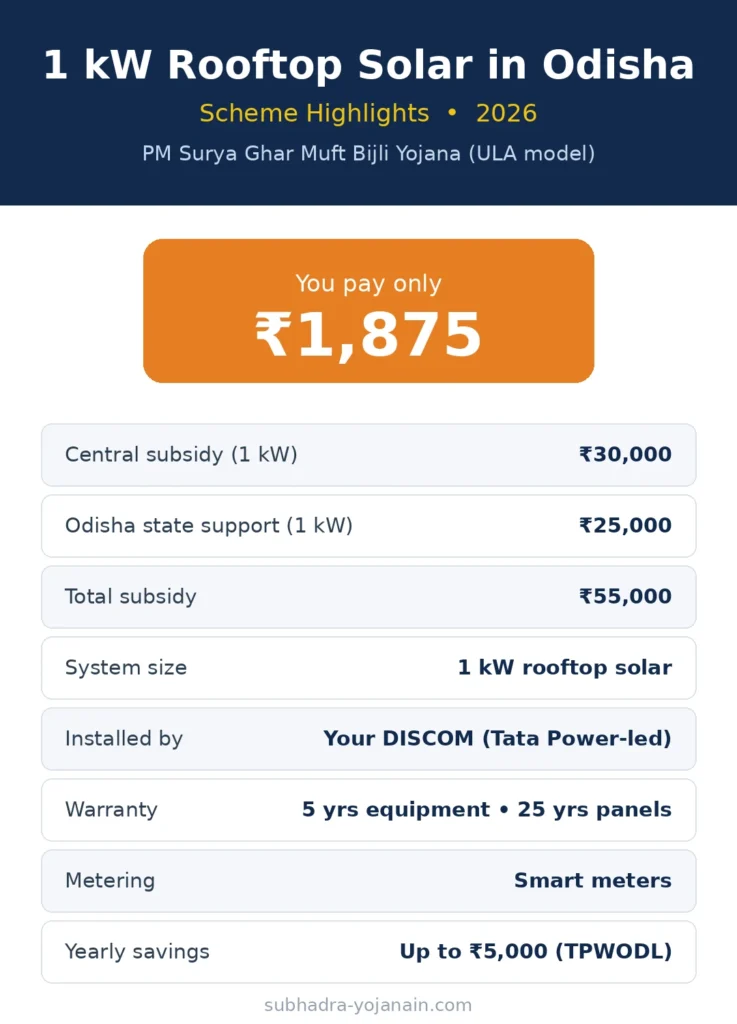
A rooftop solar system can help Odisha households reduce their electricity bills without making a large upfront investment. Under the Utility-Led Aggregation (ULA) model of PM Surya Ghar: Muft Bijli Yojana, eligible domestic consumers may be able to get a 1 kW rooftop solar system for a contribution of ₹1,875.
The offer is being promoted through electricity distribution companies (DISCOMs), including Tata Power-led utilities in Odisha. Instead of asking every household to arrange installation independently, the ULA model allows the utility to coordinate the process.
However, the ₹1,875 figure is not a universal price for every household in Odisha. Eligibility, location, meter charges and the terms of the local DISCOM matter.
This guide explains the Odisha 1 kW rooftop solar scheme, the subsidy calculation, eligibility conditions, documents required, application process and the difference between the ULA offer and the regular PM Surya Ghar route.
Odisha Rooftop Solar Scheme 2026: Latest Update
Odisha has made significant progress under PM Surya Ghar: Muft Bijli Yojana.
According to reports based on MNRE data published in August 2026, the state moved from 13th to 7th position nationally, recording approximately 1.74 lakh rooftop solar installations against 3.12 lakh applications. The application-to-installation conversion rate improved from 37.1% to 53.4%.
Odisha has also set a target of three lakh rooftop solar installations by 2027. The four Tata Power-led DISCOMs are supporting implementation through installation coordination, inspections, net metering and consumer outreach.
The state has also been promoting the ULA model through consumer awareness campaigns and registration support. Before applying, households should confirm the current offer and applicable charges with their local DISCOM.
Odisha 1 kW Rooftop Solar Scheme: Key Details
| Scheme Detail | Information |
|---|---|
| Scheme | PM Surya Ghar: Muft Bijli Yojana |
| Implementation model | Utility-Led Aggregation (ULA) |
| System capacity | 1 kW |
| Advertised consumer contribution | ₹1,875, subject to applicable terms |
| Central subsidy for 1 kW | ₹30,000 |
| Odisha state assistance for 1 kW | ₹25,000 |
| Combined assistance | ₹55,000 |
| Installation | Coordinated through the DISCOM |
| Main beneficiaries | Eligible domestic electricity consumers |
| Application route | Local DISCOM or national PM Surya Ghar portal |
| Official scheme portal | pmsuryaghar.gov.in |
Important: The advertised ₹1,875 contribution should not automatically be treated as the complete cost of every installation. Ask the DISCOM for a written breakdown covering the solar panel, meter, installation and any additional charges.
What Is the PM Surya Ghar ULA Model?
PM Surya Ghar: Muft Bijli Yojana is a central government scheme that promotes rooftop solar installations in residential households.
Under the regular consumer-driven model, a household applies through the national portal, selects an eligible vendor, gets the system installed and receives the applicable subsidy after the required process is completed.
The Utility-Led Aggregation (ULA) model offers another route.
In this model, the DISCOM or implementing agency coordinates installations for eligible households. This can make the process easier for consumers who do not want to manage vendor selection and installation independently.
The ULA model is particularly useful for households that need assistance with registration, installation and subsidy-related procedures.
The regular consumer-driven application route remains available through the national portal.
Why Is the 1 kW Solar System Advertised at ₹1,875?
The ₹1,875 figure has attracted attention because a normal rooftop solar installation can cost considerably more.
The amount is linked to the financial assistance available under PM Surya Ghar and Odisha’s additional state support, together with the ULA implementation arrangement.
For a 1 kW system, the subsidy calculation is:
| Subsidy Component | Amount |
|---|---|
| Central government assistance | ₹30,000 |
| Odisha government assistance | ₹25,000 |
| Total assistance | ₹55,000 |
The remaining consumer contribution depends on the specific offer and its terms.
Some older reports and advertisements mention ₹5,000, while more recent DISCOM promotions quote ₹1,875. Consumers should not assume that every older figure is wrong or that every current offer applies in every area.
The safest approach is to confirm the exact amount with the local DISCOM before signing the consent form or making a payment.
Solar Rooftop Subsidy in Odisha for 1 kW, 2 kW and 3 kW
Odisha provides additional financial assistance over and above the Central subsidy under PM Surya Ghar.
The state assistance announced for residential rooftop solar includes ₹25,000 for each of the first two kilowatts and ₹10,000 for the third kilowatt.
The combined assistance is calculated as follows:
| System Capacity | Central Subsidy | Odisha Assistance | Total Assistance |
|---|---|---|---|
| 1 kW | ₹30,000 | ₹25,000 | ₹55,000 |
| 2 kW | ₹60,000 | ₹50,000 | ₹1,10,000 |
| 3 kW | ₹78,000 | ₹60,000 | ₹1,38,000 |
The Central subsidy for residential rooftop solar is capped at ₹78,000 for systems of 3 kW or higher.
For the applicable subsidy rules, see the PM India Cabinet announcement. (https://www.pmindia.gov.in/en/news_updates/cabinet-approves-pm-surya-ghar-muft-bijli-yojana-for-installing-rooftop-solar-in-one-crore-households/)
These are subsidy figures, not guaranteed final installation prices. Actual consumer payments depend on the applicable scheme terms and installation arrangements.
1 kW Solar System Price in Odisha
A standard 1 kW rooftop solar system may be quoted at around ₹65,000 to ₹75,000 before subsidy. However, the price can vary according to the panel brand, inverter, installation work, roof condition and vendor.
| Cost Component | Approximate Amount |
|---|---|
| Typical system price before subsidy | ₹65,000–₹75,000 |
| Central and state assistance | ₹55,000 |
| Advertised ULA contribution | ₹1,875 |
The regular route and ULA route should not be treated as identical.
Under the regular route, the consumer selects a vendor and follows the subsidy process. Under the ULA model, the DISCOM coordinates the installation under its applicable terms.
Before choosing either route, compare the written quotation and confirm whether the meter, installation, maintenance and other charges are included.
Odisha 1 kW Rooftop Solar Scheme Eligibility
Eligibility can vary according to the DISCOM and the specific ULA offer. The following are important conditions to check before applying.
- You should be a domestic electricity consumer in the applicable DISCOM area.
- Your electricity connection and sanctioned load should meet the scheme’s requirements.
- You should have a suitable rooftop with sufficient sunlight.
- You should own the roof or have legal permission to install solar panels.
- Your electricity connection should not already have a subsidised rooftop solar system that makes it ineligible for another application.
- You should follow the DISCOM’s consent and documentation requirements.
Do not assume that a 1 kW connection is automatically eligible for the ₹1,875 offer. Confirm the exact sanctioned load, eligibility conditions and current availability with your local electricity office.
Can Tenants Apply?
Tenants may need written permission from the property owner before installing rooftop solar.
The DISCOM may also require the electricity connection holder to provide consent. A tenant should confirm these requirements before submitting an application.
Which Tata Power DISCOM Covers Your Area?
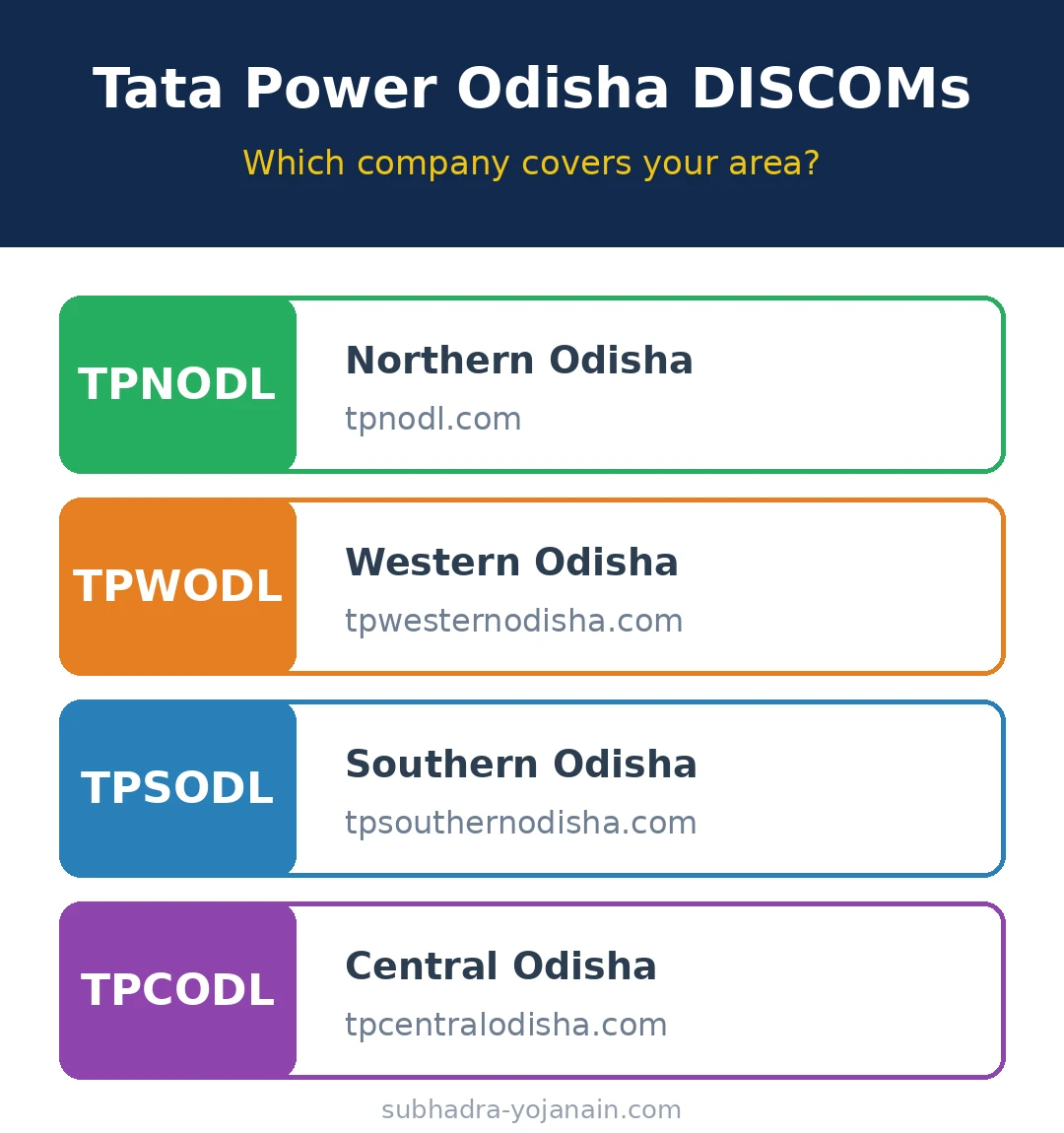
Odisha has four Tata Power-led electricity distribution companies. Each operates in a separate service area.
| DISCOM | Region | Official Website |
|---|---|---|
| TPNODL | Northern Odisha | tpnodl.com (https://www.tpnodl.com/) |
| TPWODL | Western Odisha | tpwesternodisha.com |
| TPSODL | Southern Odisha | tpsouthernodisha.com |
| TPCODL | Central Odisha | tpcentralodisha.com |
The ₹1,875 offer has been promoted by DISCOMs in Odisha, but the exact conditions and charges may differ.
Consumers in other distribution areas should check with their electricity provider or OREDA before assuming that the same offer is available.
Documents Required for the Odisha Rooftop Solar Scheme
The exact document list should be confirmed with your DISCOM. Keep the following information ready:
- Aadhaar card or another accepted identity document
- Latest electricity bill
- Consumer number
- Address proof, if required
- Roof ownership proof or permission from the owner
- Mobile number linked to the application
- Bank account details, where required for the subsidy process
- Signed consent form, if applying under the ULA model
The DISCOM may request additional documents depending on the connection and installation.
How to Apply for the Odisha 1 kW Rooftop Solar Scheme
There are two main application routes: the DISCOM-led ULA model and the regular PM Surya Ghar portal.
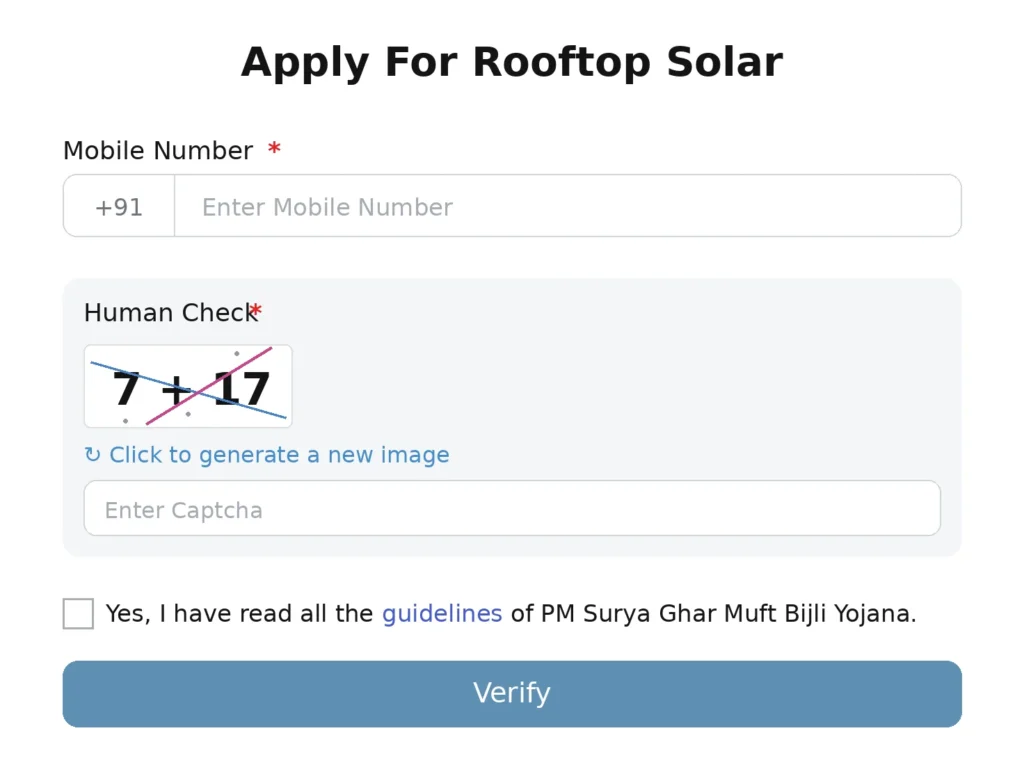
Method 1: Apply Through Your DISCOM Under the ULA Model
Step 1: Check your electricity connection
Find your consumer number and check the details on your latest electricity bill.
Step 2: Identify your DISCOM
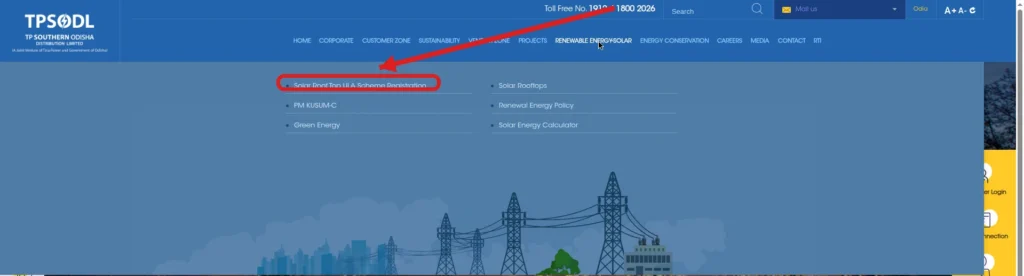
Confirm whether your electricity provider is TPNODL, TPWODL, TPSODL or TPCODL.
Step 3: Contact the DISCOM
Visit the official website or your nearest customer service centre. Ask whether the 1 kW ULA offer is currently available in your area.
Step 4: Confirm the payment
Ask for a written breakdown of the ₹1,875 contribution and any separate meter or installation charges.
Step 5: Submit the consent form
Complete the required form and provide the documents requested by the DISCOM.
Step 6: Roof inspection and installation
The implementing team checks the rooftop and coordinates the installation through the approved process.
Step 7: Metering and commissioning
The system is inspected and connected according to the applicable metering requirements. Ask the DISCOM for confirmation that the installation has been commissioned.
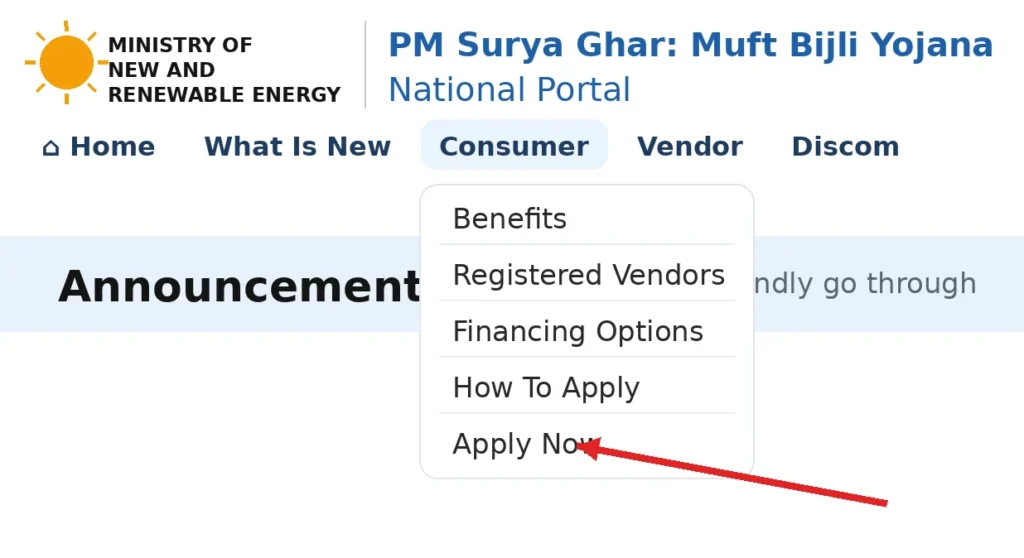
Method 2: Apply Through the PM Surya Ghar National Portal
Consumers choosing the regular route can follow these steps:
- Visit pmsuryaghar.gov.in.
- Select the rooftop solar application option.
- Enter your state, DISCOM and electricity consumer number.
- Complete the registration and application details.
- Follow the portal’s instructions for technical feasibility and vendor selection.
- Select an eligible vendor and get the rooftop solar system installed.
- Complete the required inspection and metering process.
- Submit the subsidy request through the portal as instructed.
The portal route and the ULA route may have different processes. Confirm with your DISCOM before starting a second application.
How Much Electricity Can a 1 kW Solar System Generate?
A 1 kW rooftop solar system can produce around 100 units per month under suitable conditions. Actual generation depends on sunlight, weather, roof direction, panel angle, shading and maintenance.
For example:
| Household Usage | What a 1 kW System May Mean |
|---|---|
| Low monthly consumption | May cover a large share of usage |
| Moderate monthly consumption | Can reduce the electricity bill |
| High monthly consumption | May not generate enough electricity to cover all usage |
The PM Surya Ghar scheme aims to help households obtain up to 300 units of electricity per month through rooftop solar. This is not a guarantee that every 1 kW system will generate 300 units.
The Central government’s scheme details are available on the PM India website. (https://www.pmindia.gov.in/en/news_updates/cabinet-approves-pm-surya-ghar-muft-bijli-yojana-for-installing-rooftop-solar-in-one-crore-households/)
How Much Can You Save With a 1 kW Rooftop Solar System?
TPWODL has promoted savings of up to approximately ₹5,000 per year for a 1 kW system.
However, savings depend on how much electricity the system generates and how much of that electricity your household uses.
A home that consumes electricity mainly during daylight hours may benefit differently from a household that uses most of its power at night.
Ask your DISCOM how the system’s generation will be adjusted against your electricity consumption. Also confirm whether the applicable metering arrangement allows surplus electricity to be exported to the grid.
Can a 1 kW Solar System Make Your Electricity Bill Zero?
It is possible for some low-consumption households, but it is not guaranteed.
A zero bill depends on electricity usage, solar generation, applicable charges and the metering arrangement. Fixed charges or other bill components may still apply.
A 1 kW system is generally more suitable for households with relatively low electricity consumption. Homes with higher usage may need a larger system.
1 kW ULA vs Regular 2 kW or 3 kW Rooftop Solar
| Factor | 1 kW ULA Model | Regular 2 kW or 3 kW Route |
|---|---|---|
| Upfront contribution | Advertised at ₹1,875, subject to terms | Depends on vendor quotation |
| Installation | Coordinated through DISCOM | Vendor selected by consumer |
| Subsidy | Applicable Central and state assistance | Applicable Central and state assistance |
| System capacity | 1 kW | 2 kW or 3 kW |
| Suitable for | Lower electricity consumption | Higher electricity consumption |
| Main consideration | Confirm eligibility and additional charges | Compare quotations and installation terms |
If your household uses a large amount of electricity, a 2 kW or 3 kW system may provide better long-term savings. The right size should be based on your electricity bill and available rooftop space rather than the lowest advertised price.
Common Mistakes to Avoid
- Assuming ₹1,875 is the complete cost: Confirm meter and installation charges in writing.
- Trusting an old advertisement: Scheme terms and prices can change.
- Paying an unauthorised agent: Use official DISCOM channels and approved procedures.
- Ignoring rooftop shade: Shading can reduce electricity generation.
- Not checking warranty terms: Ask for written warranty and maintenance details.
- Applying twice: Confirm whether an existing application or installation affects eligibility.
- Expecting a guaranteed zero bill: Actual savings depend on generation and consumption.
Odisha Rooftop Solar Scheme Progress
Odisha’s rooftop solar programme has grown rapidly under PM Surya Ghar.
According to August 2026 reports based on MNRE data:
- Odisha reached approximately 1.74 lakh rooftop solar installations.
- Applications crossed 3.12 lakh.
- The state moved from 13th to 7th position nationally.
- Odisha set a target of three lakh installations by 2027.
These figures describe the broader PM Surya Ghar programme in Odisha, not only the 1 kW ULA offer.
Looking for other Odisha welfare schemes? Read our Subhadra Yojana guides.
Non-Govt Aided Colleges in Odisha: ₹5,000 to ₹10,000 Monthly for In-Charge Principals
Odisha Free Laptop Distribution List 2026: ₹30,000 Laptop DBT, Merit List and How to Check
Odisha Commercial Layer Farming Scheme (CLFY) 2026: Rs 10 Crore Subsidy, Eligibility & Benefits
Nirman Shramik Pucca Ghar Yojana 2026: Eligibility, Benefits and How to Apply
Frequently Asked Questions
Is the 1 kW rooftop solar system in Odisha really available for ₹1,875?
The ₹1,875 contribution has been advertised under the ULA model for eligible domestic consumers. The exact amount and conditions should be confirmed with your local DISCOM.
Is the amount ₹1,875 or ₹5,000?
Both figures have appeared in scheme promotions and reports. The applicable contribution depends on the current offer and its terms. Ask your DISCOM for the latest written quotation.
How much subsidy is available for a 1 kW system in Odisha?
The Central subsidy is ₹30,000 and the Odisha state assistance is ₹25,000, giving a combined assistance figure of ₹55,000, subject to eligibility.
How much does a 1 kW solar system cost in Odisha?
A typical system may cost around ₹65,000 to ₹75,000 before subsidy. The final consumer contribution under the ULA model depends on the applicable offer and any additional charges.
Can tenants apply for rooftop solar?
A tenant may need written permission from the property owner and consent from the electricity connection holder. Confirm the requirements with the DISCOM.
Is the scheme available throughout Odisha?
PM Surya Ghar operates across India, but the ₹1,875 ULA offer may have specific conditions and service-area requirements. Check with your electricity provider.
Will a 1 kW system make my electricity bill zero?
It may cover most or all of the electricity consumption of some low-usage households. A zero bill is not guaranteed.
How long is the solar panel warranty?
Warranty terms can vary by equipment and scheme. Ask for written details covering panel performance, equipment and maintenance. Do not assume every component has the same warranty period.
Can I apply online for the Odisha rooftop solar scheme?
Yes. The regular PM Surya Ghar application route is available through pmsuryaghar.gov.in. For the ULA offer, follow the application process shared by your local DISCOM.
Final Words
The Odisha 1 kW rooftop solar scheme can be an affordable way for eligible households to begin using solar energy. The ULA model may reduce the work involved in arranging installation, while Central and state assistance can make rooftop solar more accessible.
However, the advertised ₹1,875 contribution should not be treated as a guaranteed final price for every consumer. Confirm your eligibility, the current offer, meter charges and installation terms with your DISCOM before applying.
For official scheme information, visit the PM Surya Ghar portal (https://pmsuryaghar.gov.in/) or contact your local electricity distribution company.
Disclaimer: Subhadra-yojanain.com is an independent informational website and is not affiliated with any government department or electricity distribution company. Scheme details, subsidy eligibility and consumer contributions may change. Verify all information through official sources before making a payment or submitting an application.