DDU-GKY 2.0 Skill Training 2026: Eligibility, Free Courses and How to Apply
Read in another language:
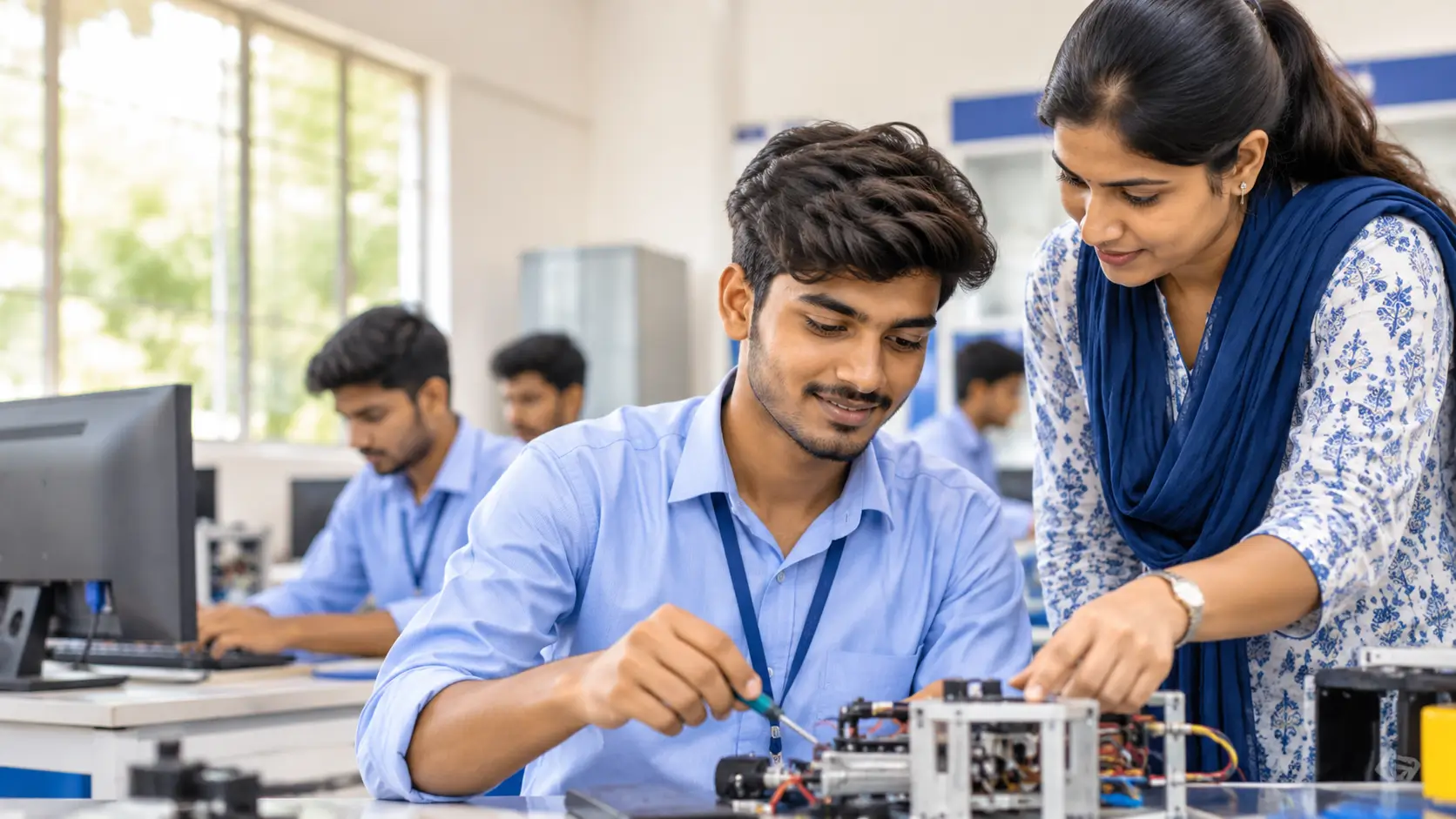
Finding a job after school or college can be difficult for young people living in rural areas, especially when they do not have the skills employers are looking for. The Deen Dayal Upadhyaya Grameen Kaushalya Yojana (DDU-GKY) aims to bridge this gap by providing job-oriented skill training to eligible rural youth.
Under the upgraded DDU-GKY 2.0 programme, training is linked to employment, with additional support to help candidates stay in their jobs after placement. The scheme covers different industries, including healthcare, retail, hospitality, agriculture, logistics and other emerging sectors.
The Ministry of Rural Development has started expanding DDU-GKY 2.0 training batches across States and Union Territories during 2026. Eligible candidates can explore available courses and training centres through the official portal or their State Rural Livelihoods Mission.
This guide explains DDU-GKY 2.0 eligibility, training duration, benefits, available courses, registration process and the latest 2026 updates.
DDU-GKY 2.0: Overview
| Particular | Details |
|---|---|
| Scheme name | Deen Dayal Upadhyaya Grameen Kaushalya Yojana |
| Short name | DDU-GKY |
| Current version | DDU-GKY 2.0 |
| Ministry | Ministry of Rural Development |
| Scheme type | Centrally Sponsored Scheme |
| Launch date | 25 September 2014 |
| Target beneficiaries | Poor rural youth |
| Standard age limit | 15 to 35 years |
| Age relaxation | Up to 45 years for eligible special categories |
| Training duration | 3 to 12 months |
| Minimum training hours | 576 hours |
| Training | Job-oriented skill development |
| Placement requirement | Minimum six months under DDU-GKY 2.0 |
| Post-placement support | ₹1,270 per month for six months |
| Retention support | Additional ₹5,000 subject to eligibility |
| Official portal | kaushal.rural.gov.in |
What Is Deen Dayal Upadhyaya Grameen Kaushalya Yojana?
Deen Dayal Upadhyaya Grameen Kaushalya Yojana is a government skill development programme launched on 25 September 2014 under the National Rural Livelihoods Mission (NRLM).
The scheme focuses on helping poor rural youth acquire skills required by employers. Instead of offering training alone, DDU-GKY connects skill development with placement opportunities and employment tracking.
The programme is implemented through State Rural Livelihoods Missions and approved Project Implementing Agencies (PIAs). Candidates receive training in job-specific skills, communication, digital literacy and workplace readiness.
The upgraded DDU-GKY 2.0 guidelines became applicable from 1 April 2025, introducing changes to training delivery, placement duration, employment retention and post-placement support.
Latest DDU-GKY 2.0 Update for 2026
The Ministry of Rural Development announced the expansion of DDU-GKY 2.0 training batches across most States and Union Territories from October 2026.
According to the PIB release dated 25 September 2026:
- 24 States and Union Territories had allocated training targets to implementing agencies.
- More than 5.6 lakh training targets had been allocated across over 1,200 projects.
- Around 70,000 rural youth were expected to begin training in October 2026.
- A total of 2,015 batches were planned for the October rollout.
- More than 9 lakh training targets were allocated across 31 participating States and UTs for the 2026–28 period.
The Ministry asked participating States and UTs to accelerate the process of starting training batches and allocating targets to implementing agencies.
These figures refer to programme targets and planned training batches. They do not mean that every district has an open admission process or that all seats are available for immediate registration.
Official update: PIB – 70,000 Rural Youth to Begin Skill Training Under DDU-GKY 2.0 (https://www.pib.gov.in/PressReleasePage.aspx?PRID=2314665&lang=1®=3)
What Has Changed Under DDU-GKY 2.0?
The updated programme places greater emphasis on sustainable employment instead of simply completing a training course.
1. Longer placement requirement
Under the earlier framework, placement was generally counted after three months of employment. Under DDU-GKY 2.0, the minimum placement duration has been extended to six months.
The revised framework also covers eligible wage employment, self-employment and gig employment, subject to scheme requirements.
2. Structured skill training
The minimum training requirement remains 576 hours.
A three-month training course includes:
| Training component | Hours |
|---|---|
| Job-specific or domain training | 396 |
| English communication | 60 |
| Employability and life skills | 60 |
| Computer and digital literacy | 30 |
| Entrepreneurship | 30 |
| Total | 576 |
Candidates therefore receive technical training as well as the communication and workplace skills needed to perform their jobs.
3. Post-placement financial support
Candidates who meet the placement requirements can receive financial support of ₹1,270 per month for six months.
The total amount is ₹7,620.
4. Employment retention benefit
Candidates who remain employed for 365 days, subject to the prescribed conditions and a maximum employment break of 60 days, may receive an additional ₹5,000 retention support.
The benefit is intended to encourage candidates to remain employed rather than leave a job shortly after placement.
5. Migration Support Centres
Candidates who move to another city or state for work may receive assistance through Migration Support Centres established by State Rural Livelihoods Missions.
These centres can help with accommodation, counselling, employment-related information and settling into a new workplace.
6. Digital monitoring
DDU-GKY 2.0 uses technology for training management, attendance, assessments, candidate records and placement tracking. The programme also provides a public candidate portal for searching training opportunities and checking the performance ratings of training agencies.
DDU-GKY Eligibility Criteria 2026
Candidates must meet the scheme’s eligibility conditions before joining a training programme.
Age limit
The standard age limit is 15 to 35 years.
The upper age limit may be extended to 45 years for eligible categories, including women and certain special groups such as Persons with Disabilities, Particularly Vulnerable Tribal Groups and other specified vulnerable categories.
Candidates should confirm the applicable age relaxation with the State Rural Livelihoods Mission or training agency.
Household eligibility
The programme is intended for poor rural households. Eligibility may be established through the prescribed identification process or supporting household documents.
Depending on the applicable rules, documents or criteria may include:
- Below Poverty Line (BPL) records
- Antyodaya Anna Yojana or eligible ration card
- MGNREGA household records
- Self-Help Group membership or household connection
- Other recognised household eligibility criteria
Possession of one particular document should not be treated as the only eligibility condition in every state.
Social inclusion
DDU-GKY includes social inclusion targets to improve participation among disadvantaged groups.
The scheme’s prescribed coverage includes:
- SC/ST communities
- Women
- Persons with Disabilities
Candidates from eligible categories should ask their State Rural Livelihoods Mission about the applicable inclusion requirements and available training opportunities.
Documents Required for DDU-GKY Registration
Applicants may be asked to provide documents for identity, age, household eligibility and registration.
Commonly required documents include:
- Aadhaar card or another accepted identity document
- Age proof
- Address proof
- BPL or eligible household document
- MGNREGA job card, where applicable
- SHG-related document, where applicable
- Caste certificate, if applicable
- Bank account details
- Passport-size photographs
- Mobile number
The document list may vary according to the state, course and training agency. Confirm the requirements before submitting your application.
What Benefits Do Candidates Receive?
DDU-GKY is designed to provide skill training and support employment rather than offer a direct cash benefit to every eligible applicant.
| Benefit | Details |
|---|---|
| Skill training | Government-funded job-oriented training |
| Course duration | 3 to 12 months |
| Training subjects | Technical skills, communication, digital literacy and employability |
| Placement assistance | Employment opportunities through approved training agencies |
| Post-placement support | ₹1,270 per month for six months, subject to scheme conditions |
| Total post-placement support | ₹7,620 |
| Retention support | Additional ₹5,000 after meeting prescribed employment conditions |
| Career development | Upskilling and reskilling opportunities |
| Migration assistance | Support through Migration Support Centres, where available |
The candidate’s salary is separate from the financial assistance provided under the scheme. Salary depends on the job role, employer, location, skills and employment terms.
More Central Govt schemes
PM Surya Ghar Yojana Odisha 2026: Get Up to ₹1.38 Lakh Subsidy
PM-RAHAT Scheme 2026: Benefits, Eligibility, Cashless Treatment & Latest Update
PM SHRI Schools in Odisha: District-Wise List, 840 Schools & Latest Funding Update
SVAMITVA Property Card 2026: Eligibility, Status Check, Download & Odisha Update
Stand Up India Scheme 2026: Loan, Eligibility & 2031 Extension
PM Jan Dhan Yojana 2026: Benefits, ₹10,000 Overdraft, Documents and Bank Camps
PM Surya Sarovar Yojana 2026: Eligibility, Subsidy, Benefits and Latest Status
Pradhan Mantri Samajik Sahayata Yojana 2026: NSAP Gets a New Name, Disability Pension Increase, Eligibility and ₹53,428 Crore
PM Kisan 24th Installment Odisha: Date, ₹2,000 Payment Status and CM-KISAN Benefits
PF Withdrawal Rules 2026: Eligibility, Limits, Tax and Online Claim
Subhadra Yojana
How to Apply for DDU-GKY 2.0
There is no guarantee that an online registration automatically provides admission to a training batch. Candidates must identify an available course and complete the selection and verification process.
Step 1: Visit the official DDU-GKY portal
Open the official Ministry of Rural Development portal: https://kaushal.rural.gov.in
Look for candidate-related information, available training opportunities and approved training agencies.
Step 2: Find a training centre
Search for training opportunities in your state or district. Check which courses are available and whether the training centre is accepting candidates.
You can also contact your State Rural Livelihoods Mission or district rural development office for information about upcoming batches.
Step 3: Complete candidate registration
Follow the registration instructions provided through the official portal or the authorised state registration process.
If online registration is unavailable or you cannot find the correct option, contact the district office or an authorised training centre for assistance.
Step 4: Submit your documents
The training agency will check your age, identity and household eligibility. Submit the required documents only through an authorised registration process.
Step 5: Attend counselling and selection
The training centre may conduct counselling to help candidates choose a suitable course based on their education, interests and employment opportunities.
Step 6: Join the training batch
After selection and verification, candidates can join the assigned training programme. Attendance and assessments are important for successfully completing the course.
Which Courses Are Available Under DDU-GKY?
DDU-GKY offers training across different sectors and more than 800 job roles, depending on the approved projects and training opportunities available.
Some of the sectors covered include:
| Sector | Example opportunities |
|---|---|
| Healthcare | Healthcare support and related services |
| Retail | Sales, customer service and store operations |
| Hospitality | Hotel, food service and hospitality operations |
| Agriculture | Agriculture-related skills and services |
| Logistics | Warehouse and logistics operations |
| Beauty and wellness | Beauty, wellness and personal care |
| Textiles | Apparel and textile-related jobs |
| Automotive | Automotive service and related occupations |
| Aviation | Selected aviation-related job roles |
| Green jobs | Emerging environmental and sustainability-related occupations |
The actual course list depends on the training agency and approved batch.
Before choosing a course, check the job opportunities available after training and whether you are willing to relocate if the placement is outside your district.
How to Choose the Right DDU-GKY Training Centre
Not every training centre will offer the same course or placement opportunities. Candidates should check a few important details before joining.
Check the training agency: Make sure the centre is associated with an authorised DDU-GKY project.
Ask about previous placements: Find out how many candidates from the previous batch completed training and obtained jobs.
Check the job role: Understand what work you will be expected to do after completing the course.
Ask about residential facilities: If the course is residential, confirm accommodation, food and other facilities.
Understand the location of employment: Some placements may be in other cities or states.
Check all conditions: Ask about attendance, assessments, certification and placement requirements before enrolling.
Special Programmes Under DDU-GKY
The programme also includes initiatives designed for specific geographical areas and groups.
Roshni
Roshni focuses on skill development for rural youth from areas affected by Left Wing Extremism and other eligible regions under the programme.
It includes residential training and provisions to encourage women’s participation.
Himayat
Himayat is a skill development initiative associated with Jammu and Kashmir and Ladakh. It provides training and employment support to eligible youth from these regions under its applicable framework.
The eligibility and implementation details may differ from the regular DDU-GKY programme.
Job Melas and Employment Support
State Rural Livelihoods Missions organise job fairs and employment events to connect trained candidates with employers.
These events may include:
- Candidate registration
- Career counselling
- Employer interaction
- Job interviews
- Employment verification
- Placement follow-up
Candidates who have completed training can contact their State Rural Livelihoods Mission to find out whether a job fair or placement event is scheduled in their district.
Is DDU-GKY a Government Job Scheme?
No. DDU-GKY is a government skill development and placement-linked scheme, not a government recruitment programme.
Candidates receive training and assistance in finding employment. The employer may be a private company or another eligible organisation.
A job offered through DDU-GKY is not automatically a permanent government job. Candidates looking for government vacancies should apply through the relevant recruitment authority and follow its selection process.
DDU-GKY vs RSETI: Which Is Better?
Both programmes support rural youth, but their main objectives are different.
| Feature | DDU-GKY | RSETI |
|---|---|---|
| Main objective | Job-oriented skill training and placement | Entrepreneurship and self-employment |
| Target group | Poor rural youth | Eligible rural unemployed youth |
| Age | Generally 15–35 years, with eligible relaxation | Generally 18–50 years |
| Training | Placement-linked skills | Business and self-employment skills |
| Employment support | Placement assistance | Entrepreneurship support and handholding |
| Best suited for | Candidates seeking jobs | Candidates planning to start their own business |
If you want to work for a company after completing a skill course, DDU-GKY may be a suitable option. If you want to start a small business or become self-employed, RSETI may be worth exploring.
Beware of Fake DDU-GKY Registration Websites
Candidates should be careful when searching for online registration links.
Do not pay an agent for a guaranteed admission, training seat or job placement. DDU-GKY is a government-funded programme, and candidates should verify any charges or claims directly with the authorised training agency or State Rural Livelihoods Mission.
Never share your Aadhaar OTP, bank OTP or sensitive personal information with an unofficial website or agent.
Use the official portal and authorised government channels to verify training opportunities.
Frequently Asked Questions
What is DDU-GKY 2.0?
DDU-GKY 2.0 is the updated version of the Deen Dayal Upadhyaya Grameen Kaushalya Yojana. It provides placement-linked skill training to eligible poor rural youth and focuses on sustainable employment.
What is the age limit for DDU-GKY?
The standard age limit is 15 to 35 years. Eligible special categories may receive age relaxation up to 45 years under the applicable rules.
Is DDU-GKY training free?
The scheme provides government-funded skill training to eligible candidates. Candidates should verify the conditions with an authorised training centre and should not pay unofficial agents for admission.
How long is DDU-GKY training?
Training courses generally last from three to twelve months. The minimum training requirement is 576 hours, depending on the course and approved training structure.
How much money is given after placement?
Eligible placed candidates may receive ₹1,270 per month for six months, amounting to ₹7,620 in post-placement support.
What is the ₹5,000 retention benefit?
Candidates who meet the prescribed employment retention conditions, including employment for 365 days with a maximum break of 60 days, may receive an additional ₹5,000.
Can urban youth apply for DDU-GKY?
DDU-GKY primarily targets poor rural youth. Urban candidates should check other skill development programmes designed for their eligibility category.
Does DDU-GKY guarantee a government job?
No. The scheme provides skill training and placement assistance. Jobs are generally with eligible employers and are not automatically government posts.
How can I find DDU-GKY training centres near me?
Visit the official DDU-GKY portal or contact your State Rural Livelihoods Mission or district rural development office to find authorised training centres and upcoming batches.
When will the next DDU-GKY 2.0 batch start?
Training batches are being rolled out in phases during 2026. The availability of courses and admission dates varies by state, district and training agency. Contact your local authorised centre for the latest information.
Official Sources
- DDU-GKY 2.0 Official Portal (https://kaushal.rural.gov.in/)
- Kaushal Bharat Portal (https://kaushalbharat.gov.in/)
- PIB – DDU-GKY 2.0 Training Rollout, September 2026 (https://www.pib.gov.in/PressReleasePage.aspx?PRID=2314665&lang=1®=3)
- PIB – DDU-GKY 2.0 Background and Programme Details (https://www.pib.gov.in/PressReleasePage.aspx?PRID=2314249&lang=1®=3)
- DDU-GKY 2.0 Guidelines, May 2025 (https://www.kaushal.rural.gov.in/assets/files/Deen%20Dayal%20Upadhyaya%20Grameen%20Kaushal%20Yojana.pdf)
For more government schemes, visit our Central Government Schemes section.
Disclaimer: This is an independent informational website and is not affiliated with the Government of India. Scheme eligibility, course availability, registration procedures and benefits may change. Candidates should verify the latest details through official government sources before applying.